Complex parts can create difficult coating challenges. Recesses, tight spaces, intricate geometries, and other hard-to-reach areas may be difficult to coat consistently with spray, powder, or other common application methods.
For parts that can be fully immersed and properly drained, industrial dip coating can offer an efficient alternative. By immersing the part in a liquid coating, the process can provide coverage across complex surfaces while excess material drains back into the coating tank.
But dip coating isn’t right for every part or production line. Part geometry, substrate, drainage, desired film thickness, coating viscosity, cure method, and end-use performance all affect whether a dip coating system will work as intended.
Understanding those factors is the first step in determining whether dip coating is the right application method for your process.
What Is Industrial Dip Coating?
Industrial dip coating is an application process in which a part or component is immersed in a liquid coating and then withdrawn at a controlled rate.
The process can be used to coat metal, plastic, and other substrates, particularly when part geometry makes other application methods difficult or inefficient.
Because the part is immersed, the coating can reach recesses, edges, and other areas that may be challenging to coat consistently with spray equipment. However, the part must also be designed or positioned so excess coating can drain effectively.
How Does the Dip Coating Process Work?
The exact process depends on the substrate, coating, equipment, and desired finish, but industrial dip coating generally involves four stages.
1. Surface Preparation
Coating performance starts with the condition of the substrate.
Oil, dirt, rust, scale, mold-release agents, and other contaminants can interfere with adhesion. Depending on the substrate and coating system, preparation may involve cleaning, chemical pretreatment, abrasive blasting, or another surface-preparation method.
Some systems may also require a primer.
The important consideration isn’t simply whether the part looks clean. The surface needs to be properly prepared for the specific coating system being applied.
2. Immersion
The prepared part is immersed into the coating at a controlled rate.
Part orientation can be important during this stage. Complex shapes, cavities, and recessed areas need to allow the coating to reach the intended surfaces without trapping excessive air.
3. Dwell
The part remains immersed for a specified period.
The appropriate dwell time depends on the coating, part geometry, application process, and desired results. A controlled process helps improve consistency from one part to the next.
4. Withdrawal and Drainage
The part is withdrawn from the coating at a controlled rate and allowed to drain.
Withdrawal rate, coating viscosity, temperature, and other process variables can influence film build and appearance. In general, changes to the withdrawal process can change how much coating remains on the part.
Consistent movement and adequate drainage are important for achieving a repeatable finish.
When Is Dip Coating a Good Choice?
Dip coating is particularly useful when the geometry of a part makes other application methods inefficient.
It may be worth considering when:
- Parts contain recesses or areas that are difficult to reach with spray equipment
- Components can be fully immersed and properly drained
- Coating-transfer efficiency is important
- Production involves large quantities of similar parts
- The application lends itself to a repeatable or automated process
- Spray application would create excessive overspray or labor
- The production volume does not justify investment in another finishing system
The decision should still be based on the complete manufacturing process—not geometry alone.
Common Industrial Dip Coating Applications
Dip coating can be used for a variety of manufactured parts and components.
HVAC and Fabricated Metal Components
Parts with blades, openings, recesses, or other complex geometries can be challenging to spray uniformly.
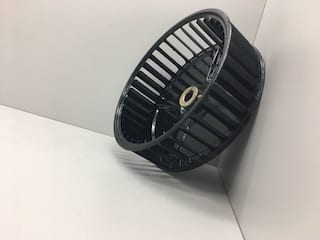
Metal blower wheels used in HVAC and air-pollution-control equipment are one example. Their numerous blades and interior surfaces can make spray application time-consuming and difficult to control.
When the component can be properly immersed and drained, dip coating can provide a more efficient way to reach those surfaces.
Tool Handles
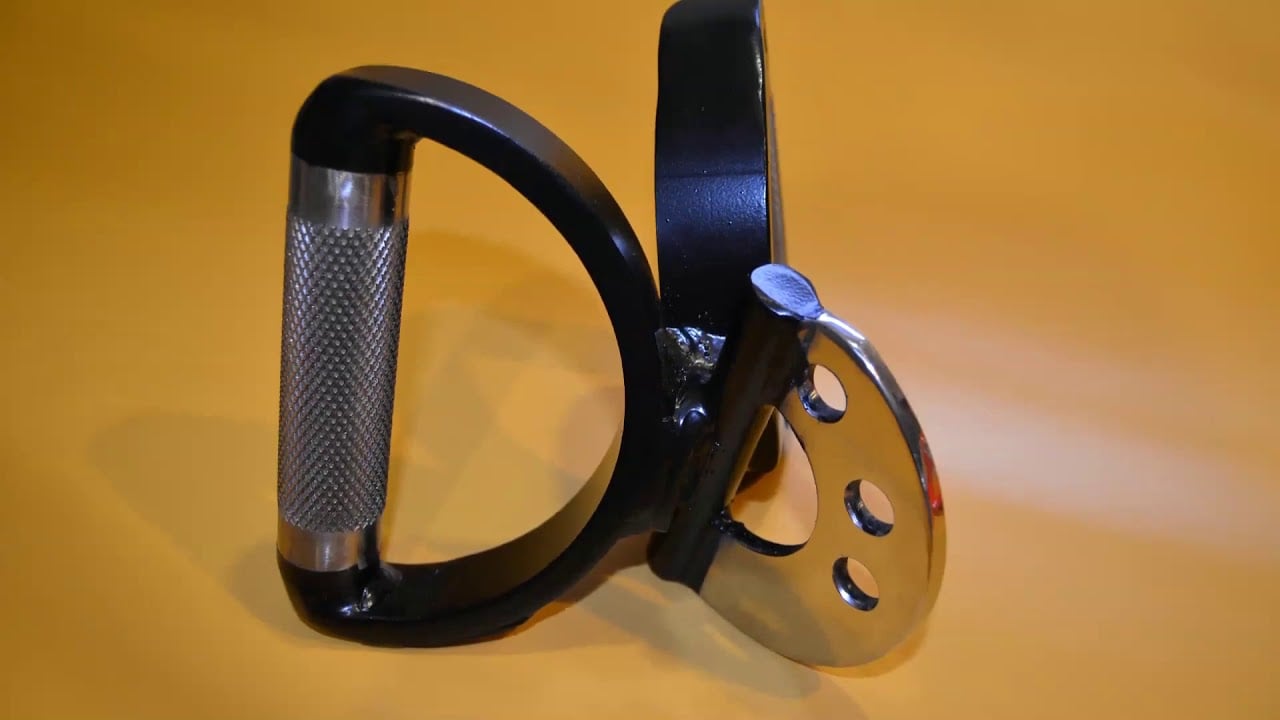
Some manufacturers use dip coatings to create a graspable finish on tool handles and similar products.
Depending on the required feel, durability, substrate, and production process, a dip-applied coating may provide an alternative to manufacturing and installing a separate molded grip.
Racks, Fencing and Open Metal Structures
Open metal structures can also lend themselves to dip coating.
Spraying certain racks, fencing, and similarly shaped components can require significant labor and create overspray. At production volumes that don’t justify another finishing system, a properly designed dip process may provide a practical alternative.
What Are the Advantages of Dip Coating?
For the right application, industrial dip coating can offer several benefits.
Coverage of complex geometries: Immersion allows the coating to reach accessible surfaces and recesses that may be difficult to spray consistently.
High transfer efficiency: Excess coating can drain from the part back into the tank rather than being lost as overspray.
Reduced material waste: Greater transfer efficiency can help manufacturers make more effective use of coating material.
Repeatability and automation: Immersion, dwell, withdrawal, and drainage can be incorporated into controlled, repetitive production processes.
Production efficiency: For certain parts and production volumes, dip coating may be more practical than labor-intensive spraying or investment in another finishing system.
These benefits depend on matching the coating, part design, equipment, and production process.
When Is Dip Coating Not the Right Choice?
Dip coating has limitations, and recognizing them is just as important as understanding its advantages.
A part that cannot drain properly may retain excess coating in cavities or recessed areas. Lightweight components may present problems during immersion. Gravity can also contribute to uneven film build as the coating drains from the part.
Potential challenges include:
- Poor drainage
- Uneven film thickness
- Runs or sags
- Excessive coating buildup along lower edges
- Air entrapment
- Parts that move or float during immersion
- Production or cure requirements that don’t fit the coating system
Some of these issues can be addressed through part orientation, process adjustments, or coating formulation. Others may indicate that dip coating isn’t the best application method for the part.
What Makes a Coating Suitable for Dip Application?
Choosing dip coating as the application method is only half of the decision. The coating itself needs to work with the dip process.
Important considerations can include:
- Substrate
- Part geometry
- Coating viscosity
- Desired film build
- Flow and leveling
- Drainage
- Sag resistance
- Adhesion
- Cure method and available cure time
- Production speed
- Required appearance
- End-use exposure and performance
For example, a coating that provides excellent protection after cure may still be a poor fit if it doesn’t drain properly, builds too much film, sags during the process, or cannot cure within the manufacturer’s production window.
The coating needs to perform both in production and in its final operating environment.
Do You Need a Custom Dip Coating?
Not every dip coating application requires a custom formulation.
If an established coating already matches the substrate, application process, cure requirements, and end-use performance, developing something new may add unnecessary complexity.
Custom formulation becomes more relevant when an existing coating is creating recurring problems or when the production process has requirements that standard products don’t address.
For example, manufacturers may need to evaluate formulation when:
- Film build is difficult to control
- The coating doesn’t drain or level properly
- Runs or sags repeatedly occur
- Adhesion is inconsistent
- Cure time doesn’t fit production speed
- A substrate or manufacturing process has changed
- The finished part needs greater chemical, environmental, abrasion, or other resistance
- An existing coating performs inconsistently in production
In those situations, the question isn’t simply, “What coating should we buy?”
It’s “What does the coating need to do differently in our process?”
Evaluating an Industrial Dip Coating Application
A successful dip coating system requires the coating and manufacturing process to work together.
If you’re evaluating a new dip application or troubleshooting an existing one, start with the substrate, part geometry, surface preparation, immersion and withdrawal process, drainage, cure conditions, production requirements, and end-use environment.
Aexcel develops industrial coatings around those manufacturing requirements and also manufactures dip coatings as part of its coating capabilities. When formulation work is required, manufacturers can work directly with Aexcel’s lab and chemists to test adjustments and determine how changes to the chemistry affect performance.
Talk With Aexcel About Your Coating Application


