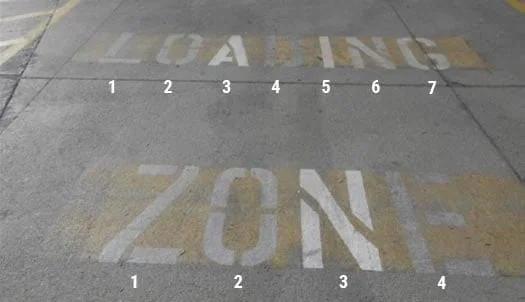
Faded parking lot lines are more than an appearance issue. Clear markings help define parking spaces, traffic flow, crosswalks, fire lanes, accessible spaces, loading areas, and other designated zones.
But when it is time to restripe, choosing the right parking lot paint is not as simple as picking white or yellow.
Today’s traffic and zone-marking coatings are available in waterborne, solvent-based, low-VOC, and higher-performance systems designed around different dry times, wear levels, application conditions, equipment, and project requirements.
For distributors, the best recommendation starts with understanding the customer’s job.
What Should You Consider When Choosing Parking Lot Paint?
Start with a few basic questions:
- What surface are they painting?
- Is this new striping or restriping?
- What weather and pavement conditions are expected?
- How quickly does the lot need to reopen?
- How much wear will the markings experience?
- What equipment will be used?
- Are there VOC or project-specific requirements?
- Is the customer trying to reduce maintenance or restriping frequency?
Those answers help narrow the options much more effectively than starting with a product name.
1. Check the Surface
Parking lot paint needs a sound, properly prepared surface to perform as intended.
Ask whether the customer is painting:
- Asphalt
- Concrete
- Existing markings
If this is a restriping project, the condition of the old coating matters. Peeling, flaking, poor adhesion, contamination, or excessive buildup can affect the performance of the new paint.
If the customer is working with new pavement, review the product data sheet for surface-preparation and application requirements before recommending a coating.
2. Consider Weather and Application Conditions
Weather can significantly affect traffic paint application and drying.
Temperature, humidity, pavement moisture, dew, and expected rain all matter, especially with waterborne traffic paints.
For example, Aexcel’s current waterborne products publish dry times under specific conditions rather than one universal value. A Fast Dry waterborne product may list a 10-minute dry time at 77°F, while other waterborne formulations are designed around different film builds or drying characteristics.
That is why distributors should avoid giving customers a blanket answer such as “waterborne dries in X minutes.”
The better question is:
What conditions will you actually be painting in?
Then compare those conditions with the product data sheet.
3. Understand Dry-Time Requirements
For many parking lot projects, reopening time is a major factor.
A busy retail center, school, warehouse, or commercial property may need to return areas to service quickly. Another project may have more flexibility.
Aexcel offers traffic paints with different dry-time characteristics, including conventional waterborne products, Fast Dry, Quick Dry, Jet Dry, High Build Jet Dry, solvent-based options, and higher-performance systems.
Do not automatically recommend the fastest product available.
Ask how quickly the area needs to reopen and whether the customer’s equipment and application conditions support that product.
4. Check VOC and Project Requirements
VOC content can affect product selection, particularly when comparing solvent-based products.
Aexcel offers low-VOC solvent-based products such as Low VOK™and ToughLine®, which has VOC content below 100 g/L and is used for applications including parking lots, crosswalks, auxiliary markings, and streets.
Federal, state, local, agency, and project-specific requirements can differ. The safest recommendation is to confirm the applicable requirements for the project and then verify the product data.
5. Match Durability to the Job
Durability matters, but more durability is not automatically better.
A customer who restripes a routine parking lot may not need the same coating system as someone dealing with heavier wear, repeated maintenance, or a higher-performance application.
Aexcel’s lineup includes options at different performance levels, including conventional traffic paints, higher-build waterborne products, high-performance acrylic zone-marking paints such as Gorilla™, and more specialized systems.
The goal is not to sell the toughest product available.
It is to recommend enough performance for the job without adding unnecessary cost or complexity.
6. Think Beyond Cost Per Gallon
The cheapest gallon of paint is not always the lowest-cost choice over time.
But I would avoid claiming that higher-cost paint automatically lasts longer.
Instead, evaluate the full application:
- Material cost
- Labor
- Setup and cleanup
- Frequency of restriping
- Downtime
- Expected wear
- Performance requirements
A higher-performance coating may make financial sense when it reduces the need for frequent restriping or better fits the customer’s operating needs.
In another application, a conventional traffic paint may be entirely sufficient.
The correct comparison is total job value, not simply price per gallon.
7. Make Sure the Paint Fits the Equipment
The coating also has to work with the customer’s striping equipment.
Some products are designed for standard conventional or airless striping equipment. Others may require more specialized application or mixing processes.
For example, Aexcel’s Low VOK™ is designed for conventional and airless line-striping equipment and arrives ready to spray.
Higher-build and two-component systems may have different application requirements.
Before recommending a product, make sure the customer can apply it correctly.
Which Aexcel Parking Lot Paint Should You Consider?
Aexcel manufactures several traffic and zone-marking technologies that can be used in parking lot applications.
Waterborne traffic paint
A good starting point when a waterborne system fits the project and application conditions.
Fast Dry, Quick Dry and Jet Dry
Options when faster turnaround is important.
High Build Jet Dry
Designed for thicker film build while retaining fast-drying characteristics.
Low VOK™
A low-VOC solvent-based acrylic option with VOC content below 100 g/L and a published maximum dry time of 10 minutes at 77°F.
ToughLine®
A high-performance low-VOC acrylic traffic and zone-marking option. Current PDS information lists a maximum 15-minute dry time at 77°F for the red formulation and typical parking lot and auxiliary-marking uses.
Gorilla™
A high-performance acrylic zone-marking option when added durability is part of the customer’s requirement.
BioStripe®
A biorenewable traffic-marking option when renewable content is part of the decision.
The right choice depends on the actual application rather than the category alone.
What Should a Distributor Ask Before Recommending Parking Lot Paint?
A short qualifying conversation can prevent a bad recommendation.
Ask:
- What are you painting?
- Is the surface asphalt, concrete, or an existing marking?
- What are the expected application conditions?
- How quickly does the area need to reopen?
- How much traffic or wear will the markings see?
- What equipment are you using?
- Are there VOC or project requirements?
- Is there a specific problem you are trying to solve?
From there, use Aexcel’s product filters and product data sheets to compare the appropriate options.
Help Your Customers Choose the Right Parking Lot Paint
The best parking lot paint is not necessarily the fastest-drying, lowest-VOC, or most durable product in the lineup.
It is the product that best fits the surface, application conditions, reopening requirements, equipment, wear level, and project specifications.
Aexcel manufactures traffic and zone-marking paints across waterborne, solvent-based, low-VOC, and higher-performance technologies. When the recommendation is not obvious, Aexcel’s technical team can help distributors work through the application and narrow the options.
[Explore Aexcel Traffic Paint Products]