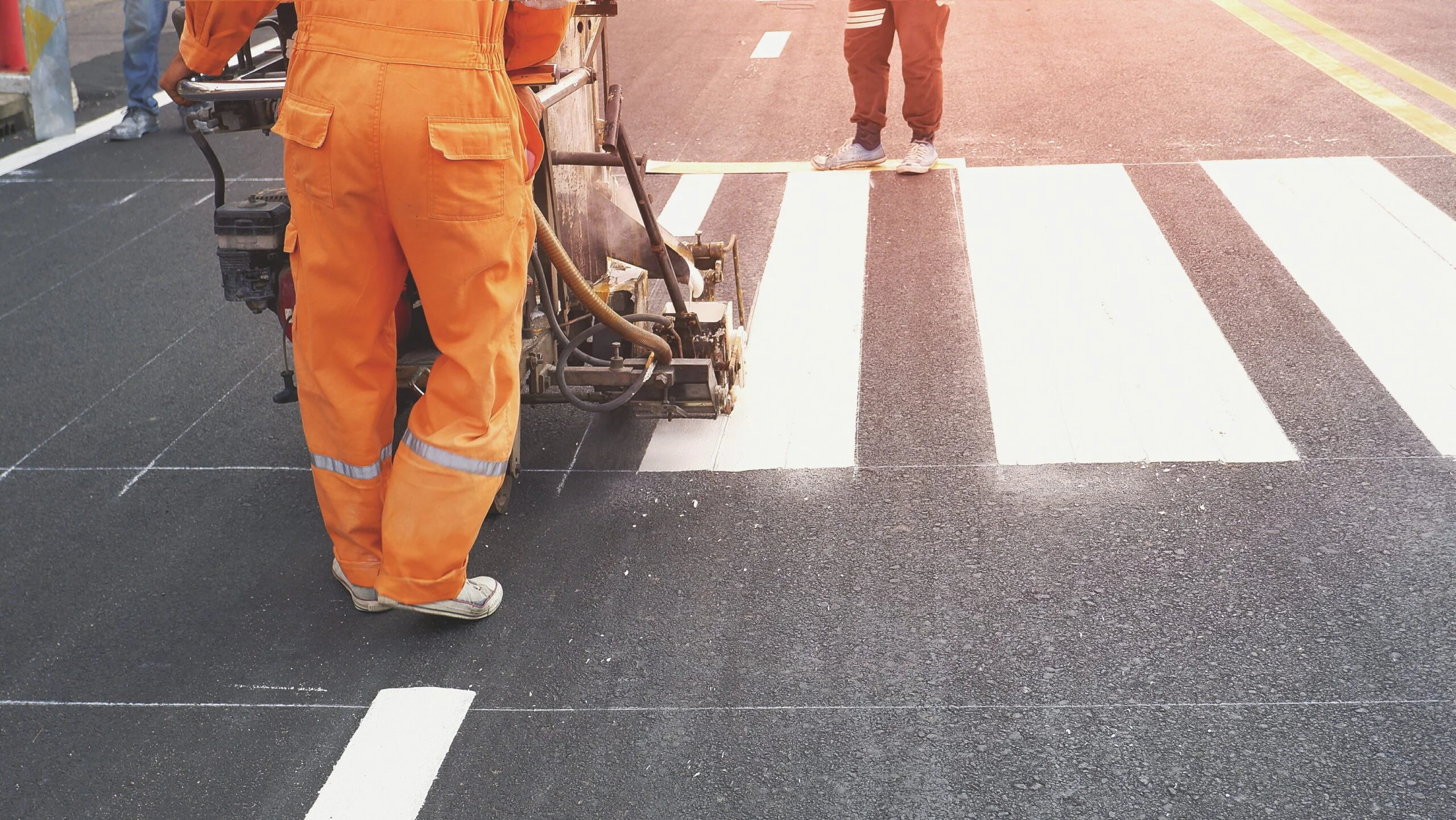
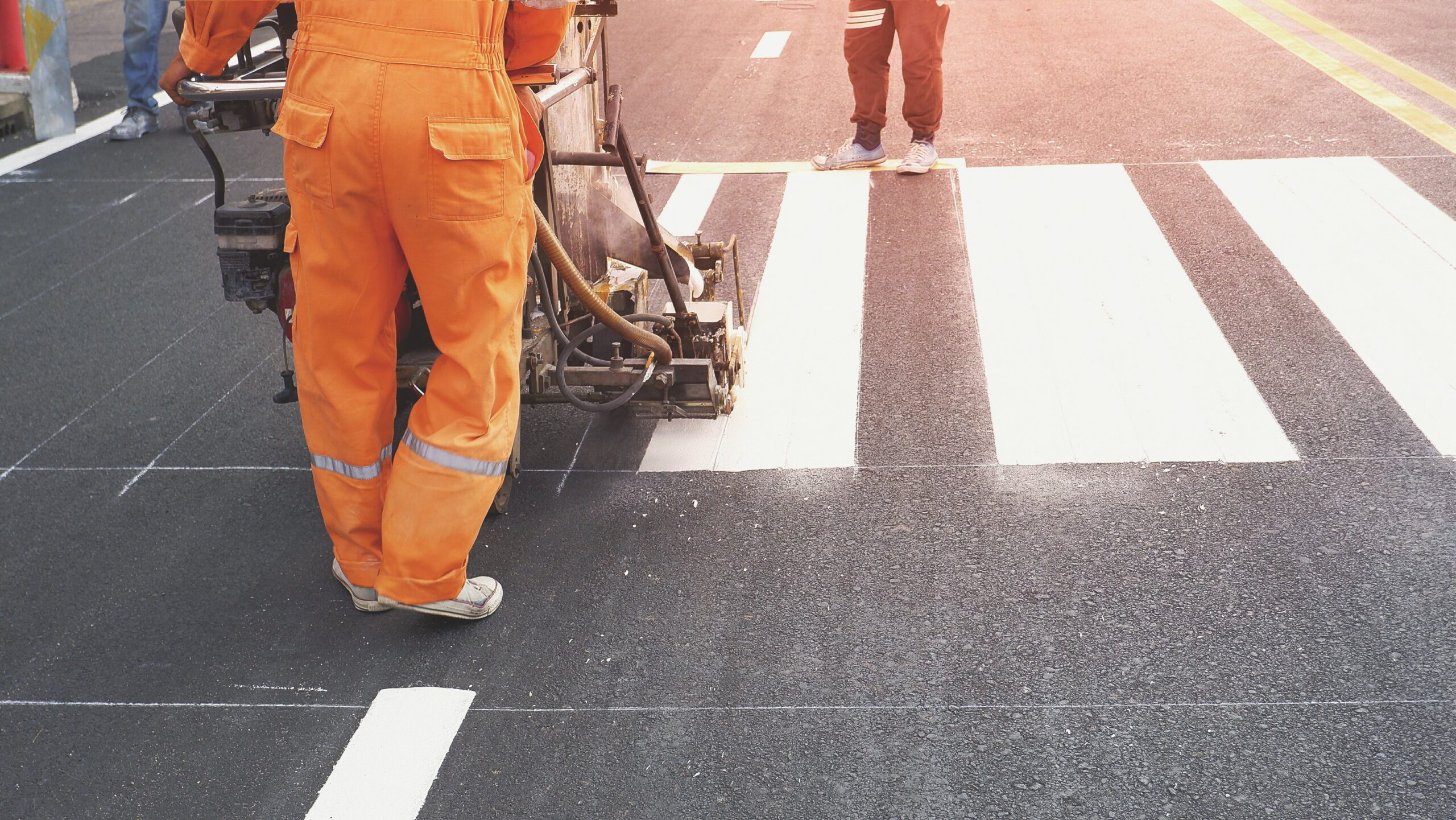
Traffic markings—the yellow and white lines on roadways, parking lots, and other similar areas—are critical to keeping motorists, bicyclists, and pedestrians safe. Today, these markings are typically made from paint, which, after undergoing numerous modernizations and improvements, offers high visibility and durability. Both of these qualities are essential to an effective roadway safety improvement material.
Traffic marking paint is available in many variations. Below, we provide an overview of waterborne traffic marking paint, including what it is and key considerations when using it.
At Aexcel, we manufacture traffic marking paint for use on roadways and in parking lots from Alaska to Florida and every area in-between. We engineer our paint products for superior performance in demanding applications, ensuring they form visible and durable traffic markings. Our two traffic marking paint offerings are waterborne and solvent-based products. Both serve as effective roadway safety improvement materials when applied and dried properly. Below, we discuss some of the key surface and temperature considerations to keep in mind when using our solvent-based paints.
Road marking—also known as line marking—refers to the application of paints and other high-visibility materials on roads, highways, runways, and other vehicle and pedestrian pathways to communicate important information. While the standardized system of colors, lines, and symbols employed can vary depending on the current federal and state guidelines, the underlying goal is always the same – ensuring the safety of the users (e.g., drivers, bikers, and walkers).
There are many types of road marking paints available, each of which offers unique characteristics that make it suitable for different purposes. Below we discuss the various paint classifications and how to choose the right one for a road marking project.
After investing significant capital into facilities and/or equipment, most business owners commit themselves to preserving their investments. Applying the right protective coating can have a considerable effect on the longevity of the facilities and equipment. However, choosing the right coating requires a critical analysis of the challenges and hazards presented by the substrate’s end use environment and ensuring the coating’s formulation is designed to address these problem areas.
There’s nothing more frustrating to supply chain managers and purchasing agents than not knowing how much something costs. With that in mind, here are some factors that contribute to the cost of an industrial coating and the effects they ultimately have on price.
Some complex parts that need coating do not lend themselves to spray, powder, or other widely used application methods. Dip coating is the process of choice for finishing materials full of nooks, crannies, and other hard-to-reach areas, provided these hard to reach areas can be drained.
Motor vehicle traffic and its accompanying pollution have been a major environmental concern for decades. With approximately 1.2 billion vehicles in operation today and more on the way, Earth’s atmosphere continues to absorb massive amounts of harmful emissions from a billion internal combustion engines on a daily basis.
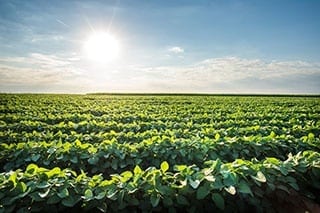
While modern technology has expanded the use of soybean components to a great number of non-food related products such as pharmaceuticals, auto parts, and low-VOC paints, food producers continue to find more uses for this most environmentally friendly and renewable resource. Meanwhile, industrial operators use soy-based lubricants because they withstand higher temperatures than petroleum-based oils.
20 Interesting Facts About Soybeans
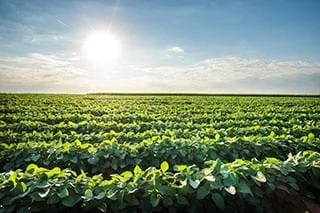
Today, American farmers use 84.7 million acres of U.S. farmland to grow soybeans.
Soybeans contain all 8 amino acids, all of which are essential for human nutrition.
The soybean has been around for centuries. The Iowa State University Department of Agronomy notes that Chinese farmers in the northeast region first domesticated and used the soybean around the 11th century BC.
Soybeans were first brought to the United States from China by Samuel Bowen in 1765.
The United States leads the world in soybean production at approximately 32% of the total global output. China is ranked fourth.
French scientist Maurice Gobley first discovered lecithin—a key nutritional component now extracted from soy oil—in 1850. He named it “lekythos” a Greek translation for egg yolks.
Soy lecithin contains choline, essential to all living cells and is, in fact, a component of live cell structures.
Soy oil is the basis for low-VOC (volatile organic compound) BioStripe® Striping Paints used in parking lots and paved roads. Because BioStripe® eliminates harmful emissions and biodegrades safely, universities, public park systems, and other eco-conscious organizations adopt it to line and stripe parking lots, pathways, and roads.
Most baked breads, cookies, crackers, pies and cakes contain soy oil.
Soy oil can be converted to biodiesel fuel with a process called “transesterification”. As a result, this eco-friendly fuel has proven to burn cleaner than traditional petroleum-based fuels.
Manufacturers combine soybeans and newspaper to produce renewable building materials called biocomposites. The construction industry frequently utilizes soybean-based products for fuel, insulation, and other building supplies.
Textile manufacturers integrate soy products into carpet fabrication, furniture coverings, and auto upholstery.
Soy oil can be a cleansing agent as well. Soybean oil releases a solvent that response teams use to clean oil from shorelines after major spills. Therefore, manufacturers also blend these powerful solvents into many heavy-duty industrial cleaners.
One acre of soybeans converts to 40,000 servings of tofu or 2,500 gallons of soy milk.
Industrial operators use soy-based lubricants because they withstand higher temperatures than petroleum-based oils.
The National Park Service operates the elevator system in the Statue of Liberty using a biodegradable, soy-based hydraulic fluid.
The automotive industry is implementing the use of eco-friendly, soy-based body parts and lubricants to go along with upholstery and carpets.
Soy foams are employed in refrigeration, insulation and even shoes.
Derived from natural soybean oil, BioStripe® traffic paint and BioSealcoat® asphalt sealer help support farmers and have earned recognition from a variety of soybean councils and associations. Contact us to learn more!
Are you looking to resurface your driveway with an eco-friendly product? Learn more about the safer way to rejuvenate & seal your driveway, BioSealSafe™.
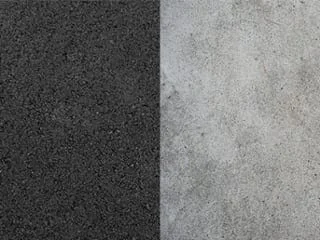
The quick answer to this question is that neither asphalt nor concrete is sustainable. However, there has been some progress by the paving industry to reduce some of the negative environmental impacts caused by these products. Efforts involve reusing and recycling existing materials and creating products from renewable materials that minimize new infrastructure’s impact on our air and water supplies.
Many different terms are used for the gloss level of an industrial coating. In the past, the terms flat, low sheen, semi-gloss, gloss and full gloss were used by manufacturers to describe the gloss level. Today, we have a number of additional descriptions which are used to describe the gloss levels that fall in between a traditional flat, low sheen, semi-gloss, gloss and full gloss. Terms such as eggshell, satin, and silk are common and usually reserved for decorative paints (house paint or interior paints), yet their use transfers to industrial coatings from time to time.